Warrior is the closest thing ArcheAge Chronicles has to a classic sword-and-board fighter, except there is no board unless you count the parry window. The class gets the Longsword and the Greatsword, and the two play like different classes that happen to share a health bar.
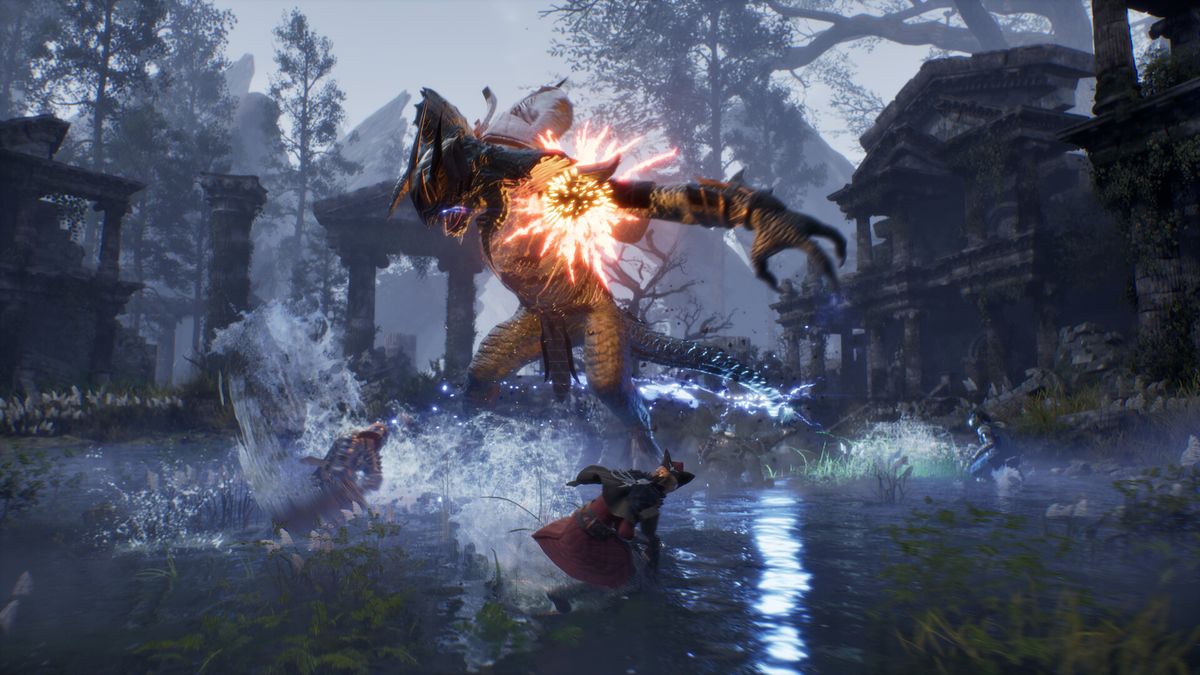
Longsword: defence as a weapon
The Longsword is the forgiving option. Its identity is defensive play, counters and parries, and sustained survivability rather than burst. You hold your ground, you let the boss commit, and you turn the recovery into damage.
That makes it the best weapon for learning a new boss, and the best weapon for a player who would rather be late to the damage than early to the dodge. It is also the weapon that punishes panic least: a mistimed block still absorbs something, and the counter window is generous compared with a Greatsword whiff.
Where it struggles is against fights that reward pure uptime. If a boss spends most of its time not attacking, the Longsword has fewer windows to convert and the fight gets long.
Pick it if: you like duels, you want to solo dungeons, or you are still learning the defensive verbs.
Greatsword: pick a window, then commit
The Greatsword trades the safety net for burst. Animations are longer, recovery is longer, and a missed swing is a genuine cost. In exchange, the hits land like a truck and the trait tree can turn a basic attack into a two-hit cleave.
The official example is worth repeating because it shows how the trees work. On the damage branch, the Greatsword unlocks Armor Break and changes sunder into Sweeping Slash: instead of one hit, two, with a wider arc. That is excellent against packs, and a trap against a boss whose punish window is shorter than your second swing. On the defensive branch, the same weapon grants Pummel Strike, an attack usable while guarding that also grants a shield to absorb damage. That single node changes the weapon from a gamble into a pressure tool.
Pick it if: you enjoy reading telegraphs, you are comfortable eating a hit you misjudged, or you want the highest per-swing payoff in the class.
Side by side
| Question | Longsword | Greatsword |
|---|---|---|
| Damage shape | Steady, counter-driven | Burst, window-driven |
| Forgiveness | High | Low |
| Best content | Solo dungeons, first boss attempts, duels | Group dungeons with a tank-ish partner, open-world packs |
| Worst content | Long fights with few attacks to counter | Bosses with short punish windows |
| Trait identity | Defensive nodes, counter modifiers | Armor Break, Sweeping Slash, Pummel Strike |
| Stat priority | Strength and Constitution | Strength, some Endurance for stamina |
Stats and traits for a Warrior
Strength is your attack stat, and Constitution is the one that keeps you in the fight long enough to counter. Endurance is a real consideration on the Greatsword because the weapon's long animations leave you short on stamina exactly when you need to escape.
Trait points come from Raeven's Coilstones, not levels. If you are stuck on a boss, the answer is almost always a Coilstone you have not claimed, not another level of grinding. The weapon traits page explains where they sit and what the branches do.
One weapon at a time
Your trait tree is per weapon. Splitting points between the Longsword and the Greatsword gives you two mediocre weapons instead of one good one. Commit to a main, then level the second weapon later when trait points are cheap to spare.
Practical Warrior habits
Block the first hit of a combo, parry the last. The first hit tells you the rhythm; the last hit is usually the biggest and the most telegraphed.
Do not chase ranged mobs with a Greatsword drawn. Walk, let them come, or swap to the Longsword if you carry both.
Use the environment. Narrow ground turns a cleave into a single-target fight, which is exactly what a Greatsword wants against a pack.
Learn one boss pattern per pull. The Warrior's advantage is repetition: the same swing you blocked twice is the one you parry on the third pull.
How the Warrior fits a group
Dungeons run for one to four players with shared quest progress, and there is no trinity queue forcing a tank role. A Warrior is still the most natural frontliner: you have the defensive options to hold a boss's attention and the survivability to survive being focused. In PvP channels, the Longsword's counter game is stronger than it looks, because players telegraph harder than bosses and commit to attacks they believe will land.
If you want the same frontline job with more crowd control and less precision, the Berserker is the next page to read.